

Tax Residency in Uruguay: Key Legal, Fiscal, and Wealth Management Factors Attracting Families and Businesses
Uruguay is solidifying its position as a top destination for international families and companies. From Punta del Este, attorney and notary José Pedro Damiani analyzes the main aspects of tax residency, current benefits, and the reasons why the country is gaining prominence in a global context of uncertainty.
The interview takes place at José Pedro Damiani’s offices, located in Surfside Village, the iconic high-end tower that marks the entrance to La Barra. The complex, featuring contemporary architecture and privileged views, has become the most exclusive corporate and business epicenter in the east, reflecting the new international profile of Punta del Este.
As an attorney and notary (escribano), Damiani leads a firm with over seven decades of history, specializing in assisting foreign families and companies that choose to settle in Uruguay. His approach combines legal, fiscal, and wealth management advice with a comprehensive long-term perspective.
A Professional Practice Focused on Integrated Solutions
—To start, how do you introduce yourself and how would you define your professional role today?
—My name is José Pedro Damiani. I am an attorney and notary by profession. Beyond the title, what I do is try to provide concrete solutions for families who come to settle in Uruguay—integrated solutions that can range from very day-to-day matters to more complex situations that arise over time.
In his experience, relocation is not an isolated administrative task but a process built in stages that requires understanding each client’s personal, family, and financial context.
—When someone arrives in Uruguay, what are usually their first needs?
—First, the issue of housing arises—buying or renting a property. That is where I step in as a notary. Then, the need for tax advice emerges, and from there, everything is tailored according to the client’s evolving requirements.
A Firm with History and Evolution
The Damiani firm was founded in 1949 as an accounting firm. Over time, it expanded its practice areas to keep pace with changes in the market and its clients.
—It started as a strictly accounting firm. Later, it expanded into private banking and investment advisory. Starting in 2007, we also began focusing on real estate development—first with our own projects and later by providing those services to various clients.
center top no-repeat

José Pedro Damiani, attorney at Estudio Damiani, a leading expert in tax and legal residency in Uruguay.
José Pedro Damiani, attorney at Estudio Damiani, a leading expert in tax and legal residency in Uruguay.
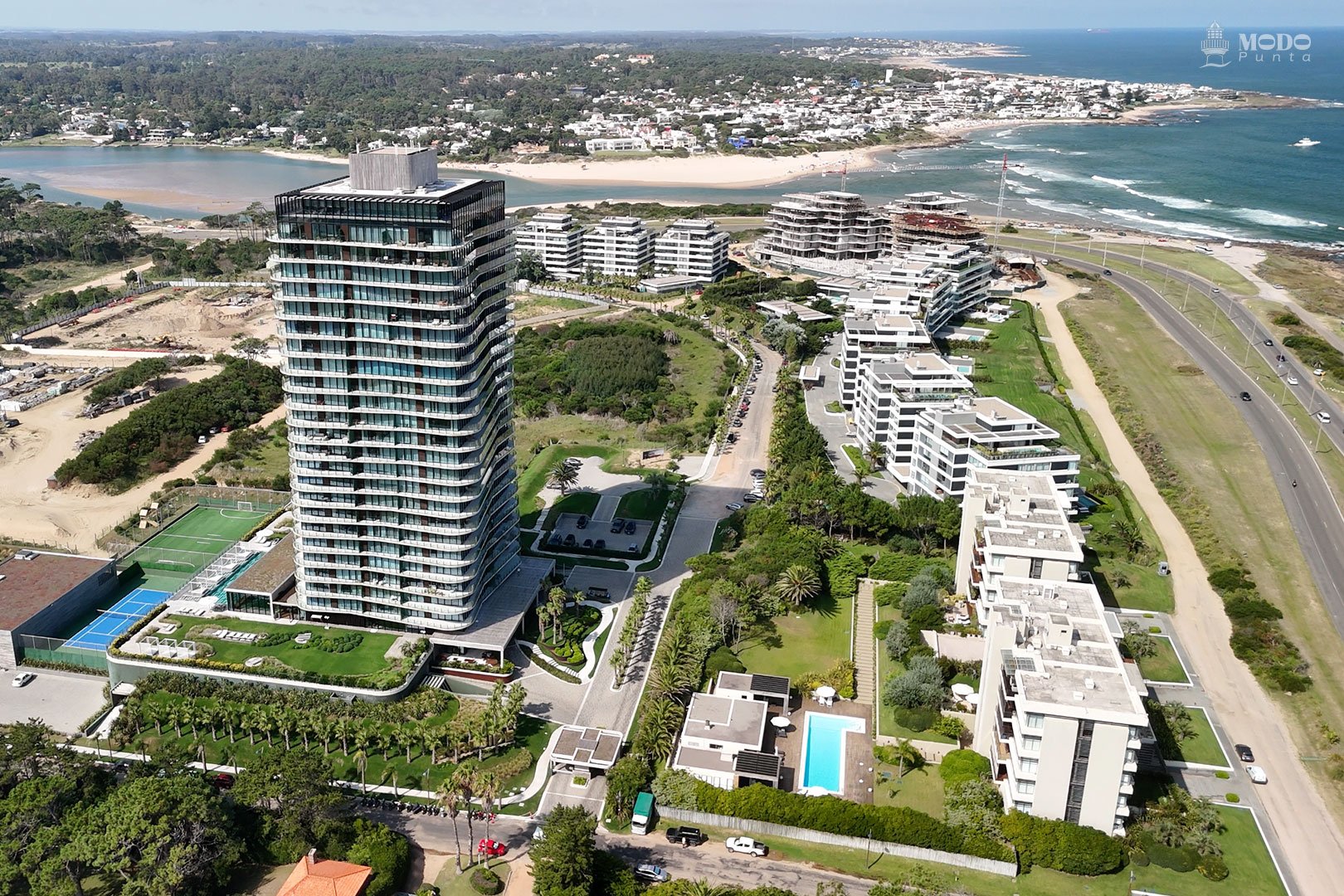
The Surfside building is the headquarters of Estudio Damiani in Punta del Este, with a presence also in Montevideo.
The Surfside building is the headquarters of Estudio Damiani in Punta del Este, with a presence also in Montevideo.
Legal Residency and Tax Residency: Key Differences
One of the points that generates the most doubt among foreigners is the difference between legal residency and tax residency—two concepts that are often confused.
—What does legal residency allow?
—Legal residency allows you to obtain a Uruguayan document, such as an identity card (cédula). For many foreigners, such as Argentines, it is the first step before moving toward tax residency. Often, proof of permanent residency in another country is required to be able to terminate tax residency in the country of origin.
—A person can obtain legal residency and never move toward tax residency. It is a neutral status; it does not generate tax obligations in Uruguay or cause issues if the person lives in another country.
—And tax residency?
—Tax residency involves submitting to tax obligations in Uruguay. There are different ways to access it, and each has its own particularities.
Ways to Access Tax Residency
—What are the ways to obtain it?
—The first is physical presence, which is quite common internationally: being in Uruguay for at least 183 days within the calendar year. That is, between January 1st and December 31st.
—Another ground is real estate investment, which must be carried out personally, not through companies. The amounts and conditions have varied and, as of 2026, they are being updated again, so it is key to analyze each case individually.
—There is also a third route linked to investments in certain funds, but it is a new regulation that is still pending full implementation.
Uruguay is establishing itself as one of the most attractive destinations for international tax residency, combining legal certainty, tax benefits, and quality of life in Punta del Este.
icon-minus
The Appeal of the Tax Holiday
One of the main incentives evaluated by those considering tax residency in Uruguay is the tax holiday regime.
—How does this benefit work?
—To understand it, you have to compare a traditional Uruguayan tax resident with someone who accesses tax residency under the tax holiday. In my case, as a Uruguayan who has always lived here, I pay a 12% tax on income generated abroad, whether it’s financial returns or capital gains.
—In contrast, those who access the tax holiday are exempt from paying taxes in Uruguay on income generated abroad for eleven years: the year they obtain tax residency and the following ten fiscal years. They only pay taxes on activities carried out within the country.
—Does this regime also apply to companies?
—No, it is an exclusive benefit for individuals. Furthermore, with the new Budget Law, the possibility of extending the regime for an additional six years was introduced, paying a reduced rate of 6%, provided that a relevant additional real estate investment is made.
—It is a significant outlay, but in certain cases, the tax savings justify it and it can be a convenient decision.
Why Uruguay and Why Punta del Este
Beyond the tax benefits, Damiani highlights structural factors that explain Uruguay’s appeal.
—Quality of life is key. Uruguay offers legal certainty, clear rules, and stability. Added to that is personal safety: people live peacefully and move freely.
Punta del Este, in particular, is undergoing a process of sustained internationalization, with improvements in infrastructure, health, education, and air connectivity.
—What recommendation would you give to a family or company considering settling in Punta del Este?
—It’s a life decision… Uruguay has improved greatly in services and connectivity. For many Argentines, for example, the distance from Buenos Aires today is almost the same as moving within the metropolitan area.
—What feedback do you receive from those who have already settled?
—Lately, many European families have relocated here, especially Germans. They all agree on highlighting Uruguay as a haven of value, a place of stability and predictability in an increasingly convulsed world.
Contact and Professional Advisory
For families and companies evaluating their relocation to Uruguay, obtaining tax residency, or long-term wealth planning, having specialized legal and tax advice is key. Estudio Damiani provides comprehensive and personalized support, combining experience, regulatory knowledge, and a strategic perspective adapted to each case.
More information and direct contact at www.jpdamiani.com.
Punta Scouting & Media Tour
https://modopunta.com/punta-scouting-and-media-tour/
Punta Scouting and Media Tour
Keep exploring #ModoPunta
Content and experiences created to understand what living in
Punta del Este is like
center top no-repeat
grid
date
DESC
english