From a perspective that crosses architecture, landscape and urban culture, architect Horacio Poklepovich Caride reflects on his professional career and the design of a house in Pueblo Mío, Punta del Este. A conversation about vocation, materiality, efficiency and the responsibility of designing for a home to be lived in for decades.
Experience accumulated over decades of professional practice shapes a close attention to the evolution of cities and of the discipline. An architect who graduated from the Universidad de Buenos Aires in 1988, he completed his training in Europe, absorbing influences from the architectural debates that marked the 1990s.
—To begin, we would like you to introduce yourself and tell us about your professional path.
—My name is Horacio Poklepovich Caride, I am an architect, a UBA graduate of 1988. I began practicing in Europe — the United Kingdom, Spain and Germany — during the nineties, which let me connect with the most advanced architectural currents of the time. I also continued my academic training there. From the 2000s on I took part in some of the most significant projects in Buenos Aires and worked with architects and designers such as Mario Roberto Álvarez, Philippe Starck, Norman Foster y Carlos Ott. I also trained in Urban Economics, which gave me an integral view of the evolution of cities and real estate developments.
—When did your connection with architecture and construction begin?
—What a good question! From a very young age, even before primary school. I had an instinctive drive to design and build. My favorite toy was “Mis Ladrillos,” a kind of River Plate Lego, with which I spent hours creating all kinds of objects, not just houses. Building was always tied to designing.
—How did you come to Pueblo Mío and what context did you find when you started the project?
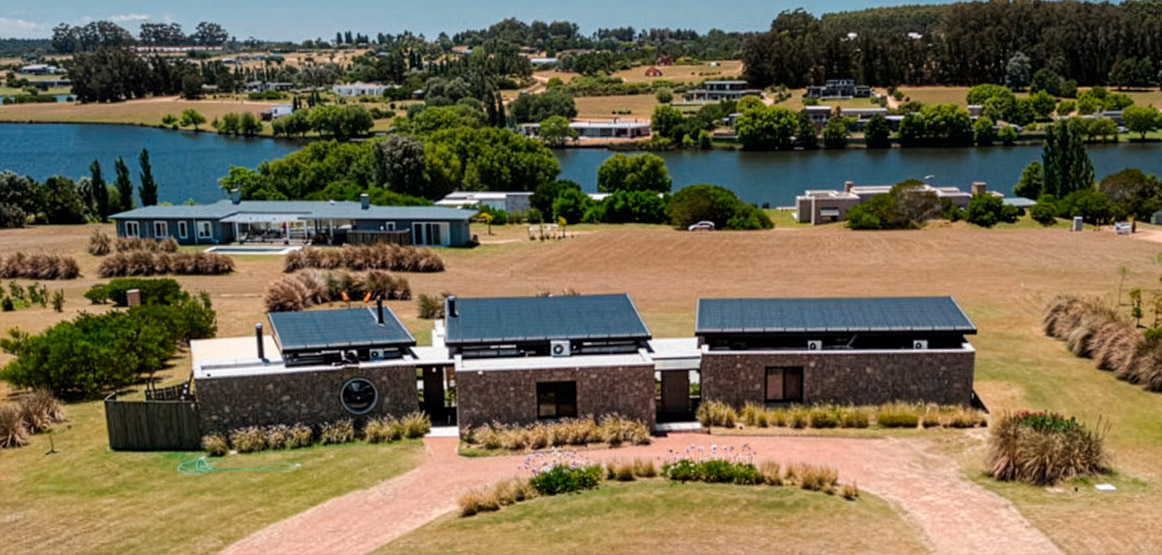
—Pueblo Mío has an exceptional setting. It brings together almost all the aesthetic attributes of the Uruguayan countryside: the rolling terrain, the long views, the central lagoon, the vegetation and the constant breeze. It is a place that is felt beyond the visual and poses a deep architectural challenge.
Start of construction in Pueblo Mío
Execution of the first construction stages of the house.
center top no-repeat
4086,4085,4084,4083,4082,4081,4080,4079,4077
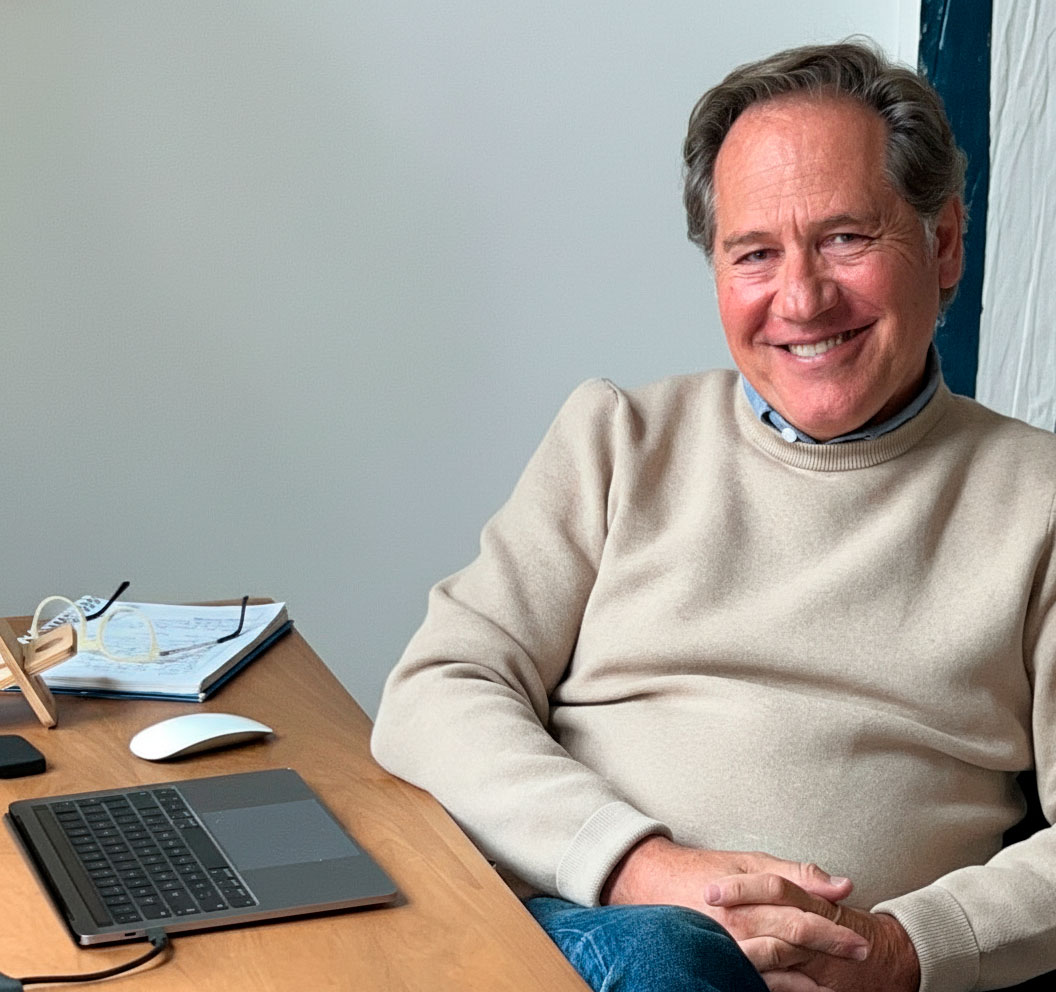
“Success should belong to the project, not the architect; the one who defines it is the client, who will live in it for decades.”
—What was the starting point for the design of the house?
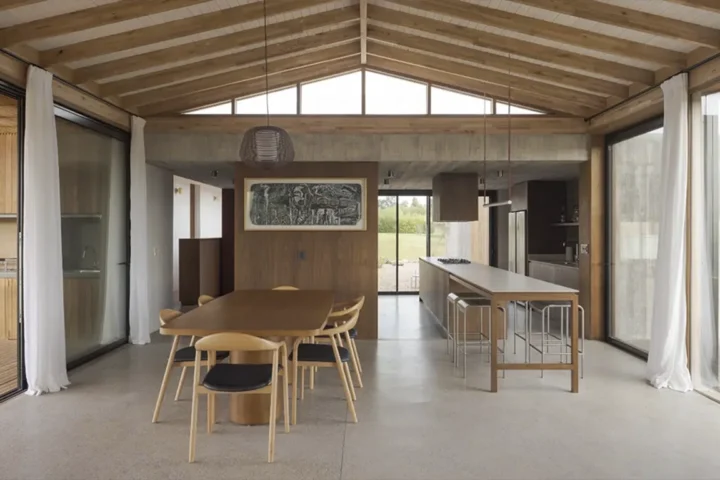
—We always start by listening to the client. In this case, the house had to reflect the family dynamic. The key concepts were flexibility and privacy, organizing the home into three distinct but connected sectors.
—Why did you choose a traditional construction system?
—Local stone was the material that best expressed the character of the place. From that decision, traditional construction was coherent both expressively and technically, as well as for long-term maintenance.
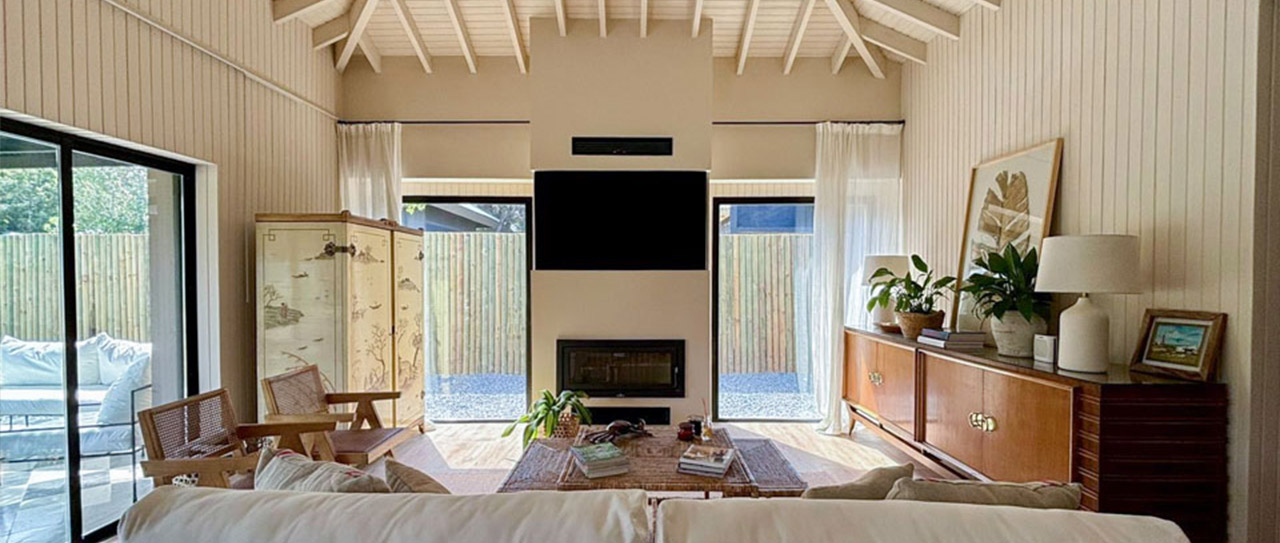
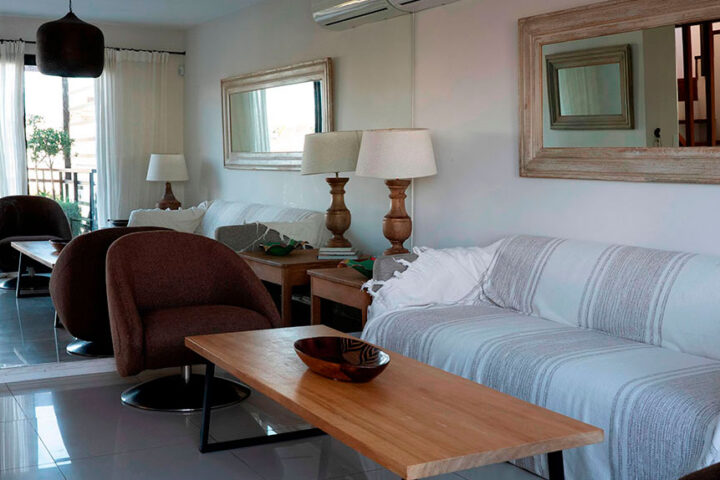
Photographic record of the current state of the house.
center top no-repeat
4188,4194,4184,4185,4186,4187,4191,4197,4183,4189,4190,4195
—How was the house designed for year-round use?
—The project maximizes energy efficiency through orientation, cross ventilation, zoned radiant flooring, hermetic double glazing and high-performance insulation. Thermally, it is a true bunker.
—To close the interview, what reflection would you like to share with the Modo Punta audience?
—An architecture project is an exceptional experience for the person who takes it on. The result must satisfy function, aesthetics, durability, budget and relevance over time.
[hr height=”30″ style=”default” line=”default” color=”” themecolor=”0″]
To learn more about the work and projects ofHoracio Poklepovich Caride, you can visit his portfolio HPC Arquitectura.
Sale of 2 lots of 4,000 m² in La Barra
Keep exploring #ModoPunta
A visual tour of Punta del Este that combines photography and audiovisual material to show each area as it really is, designed for those looking to buy or invest with clear, reliable information.
center top no-repeat
grid
date
DESC
real-estate