
The decision is not petrol versus electric: it is what distance the car covers each week. Before looking at models, answer three questions: how many kilometres you drive within Punta del Este, whether you can plug in at home (your own garage or a parking space with an outlet), and how often you travel to Montevideo or Argentina.
Someone living in La Barra, Manantiales or José Ignacio who moves between the supermarket, the school and the beach covers short distances, and the car sits parked most of the day. That is the electric car’s scenario. Someone with weekly meetings in Montevideo or frequent trips to Argentina has a different use, and the numbers change.
Two notes on the data. Several models from European brands sold in Uruguay are built in Brazil: the Volkswagen Tera arrives from the Taubaté plant. And the sales figures come from ACAU for the first half of 2026, with prices from Autoblog as of 29/09/2026, in US dollars and VAT included.
How each technology recharges
“Self-charging” is a marketing term that groups different things. The difference matters because it determines what happens on the road.
| Technology | Where the energy comes from | Plug-in? | On the highway |
|---|---|---|---|
| Petrol | Fuel tank | No | No practical range limit |
| Mild hybrid (MHEV, 48 V) | Petrol engine; a small battery assists and recharges when braking. It cannot drive on electric power alone | No | Same as a petrol car, with slight savings |
| Hybrid (HEV) | Petrol engine plus electric motor; the engine itself and regenerative braking charge the battery | No | The engine keeps generating energy |
| Plug-in hybrid (PHEV) | Larger battery charged from an outlet, plus a petrol engine | Yes | When the battery runs out it works as a hybrid |
| Extended-range electric (REEV) | The wheels are always driven by the electric motor; the petrol engine only generates electricity | Yes | The petrol engine recharges the battery while driving |
| Battery electric (BEV) | Battery only | Yes | Generates no energy on board, except regenerative braking |
Regenerative braking recovers energy when the car slows down. At constant highway speed there is almost no braking, so it recovers almost nothing, and an electric car’s consumption rises with speed. That is why a pure electric car does not recharge while travelling on the road, whereas a hybrid or a REEV does produce energy with its engine.
Petrol cars: the option with the fewest conditions
If there is nowhere to plug in at home, or if your use mixes city and highway, petrol remains the option with the fewest conditions. Three models with proven sales in the first half of 2026: two Chinese and one from a European brand.
| Model | Origin | Sales Jan–Jun 2026 | Reference price (USD) | Pros | Cons |
|---|---|---|---|---|---|
| Chery Tiggo 2 Pro 1.5 | China | 493 | 16,990 (manual) to 21,990 (CVT) | Lowest entry price in the group | Launched in Uruguay in 2021; the cheapest version is manual |
| Jetour X70 1.5T | China | 578 | 21,990 (manual) to 29,990 (DCT) | Best-selling petrol SUV on this list | The automatic version costs almost the same as hybrids such as the Chery Tiggo 4 (from 27,990) |
| Volkswagen Tera 1.0 | Europe (built in Brazil) | 530 | 22,890 to 29,990 (2025 pre-sale price, to be confirmed) | Six airbags, automatic emergency braking and stability control as standard; 3-year or 100,000 km warranty | 77 hp 1.0 engine in the entry version; the current price must be checked |
The Renault Kwid (1,006 units, imported from Brazil) was the best-selling car from a European brand in the half-year; we left it out of the table because we could not verify its current price. Hyundai HB20 and Chevrolet Onix, also among the best sellers, fall outside the Chinese-European criterion.
Hybrids: the middle ground for those who travel
A hybrid removes the dependence on chargers and lowers city fuel consumption. The market’s best-selling hybrids are Suzuki (Dzire Hybrid, 898 units; Fronx Hybrid, 489) and the Toyota Yaris Cross (384), outside the scope of this article. Among Chinese and European brands, these are the options on the price list:
| Model | Origin | Technology | Reference price (USD) | Pros | Cons |
|---|---|---|---|---|---|
| BYD Yuan Pro DM-i 1.5 | China | BYD DM-i hybrid; confirm plug-in battery capacity | 29,990 to 32,990 | Shares its body with the best-selling electric SUV (1,975 units) | Launched in June 2026, with no sales or resale history |
| Chery Tiggo 4 CSH 1.5 DHT | China | DHT hybrid | 27,990 to 30,990 | Lowest entry price among the hybrids in this table | Not among the best sellers |
| Peugeot 2008 Hybrid 1.2 145 GT | Europe | 48 V mild hybrid (confirm with the dealer) | 36,990 | Established brand network and e-DCS6 gearbox | Not plug-in; fuel savings are smaller than a full hybrid’s |
Prices of European plug-in versions climb quickly: the BMW X1 xDrive25e starts at 68,990 USD. For the use this article describes, a Chinese hybrid from the table costs less than half.
Electric cars: the best numbers for those who stay in the area
For use concentrated between Punta Ballenas and José Ignacio, the electric car has the clearest cost advantage. According to UTE, 100 km charged at home costs 37 pesos, versus 195 pesos on the public network (2026 rates, VAT included). The Residencial Triple Horario tariff has its cheapest band between 00:00 and 07:00, which matches overnight charging in a garage. Public charging costs five times more than charging at home, and its prices rose about 56% in early 2026: the favourable math depends on having somewhere to plug in at home.
On infrastructure, the concrete fact: our map of electric charging stations in Punta del Este lists 11 charging points between Punta Ballenas and José Ignacio. That is enough for local use; check them before deciding, according to your neighbourhood.
| Model | Origin | Sales Jan–Jun 2026 | Battery (kWh) | Reference price (USD) | Pros | Cons |
|---|---|---|---|---|---|---|
| BYD Seagull / Seagull Surf | China | 1,532 | 30.1 to 43.2 | 18,990 to 22,990 | Best-selling car of the half-year; lowest price in the table | Urban body and small battery for the highway |
| Geely EX2 | China | 801 | 39.4 | 20,490 to 22,490 | Second most affordable Chinese electric in the table | Same battery limitation on the highway |
| BYD Yuan Pro EV | China | 1,975 | 45.1 | 27,990 to 29,990 | Best-selling electric SUV in the country in the half-year | May fall into a taxed IMESI band from 2027 (the threshold applies to customs value, not sale price) |
| Peugeot E-2008 GT | Europe | n/a | 62 | 45,990 | Larger battery: more margin for a round trip to Montevideo | Costs more than 50% more than the Yuan Pro EV |
| BMW iX2 eDrive20 M Sport | Europe | n/a | 64.8 | 59,990 | Service and after-sales of a premium brand | The most expensive in the table; sales volume does not appear in the ranking |
What changes in 2027. The IMESI reform, in force from 1 January 2027, keeps electric cars with a customs value of up to 19,000 USD exempt, applies 5% between 19,001 and 27,000 USD and 9% above that. The Ministry of Industry estimates that about 75% of pure electric cars will remain exempt. Hybrids pay between 7% and 34.5% depending on engine displacement. Purchases may be brought forward and prices adjusted before that date, which is not confirmed.
Other drawbacks of electric cars, beyond the highway: they depend on having your own outlet; the battery loses capacity over the years; and resale of new models has no track record in Uruguay yet.
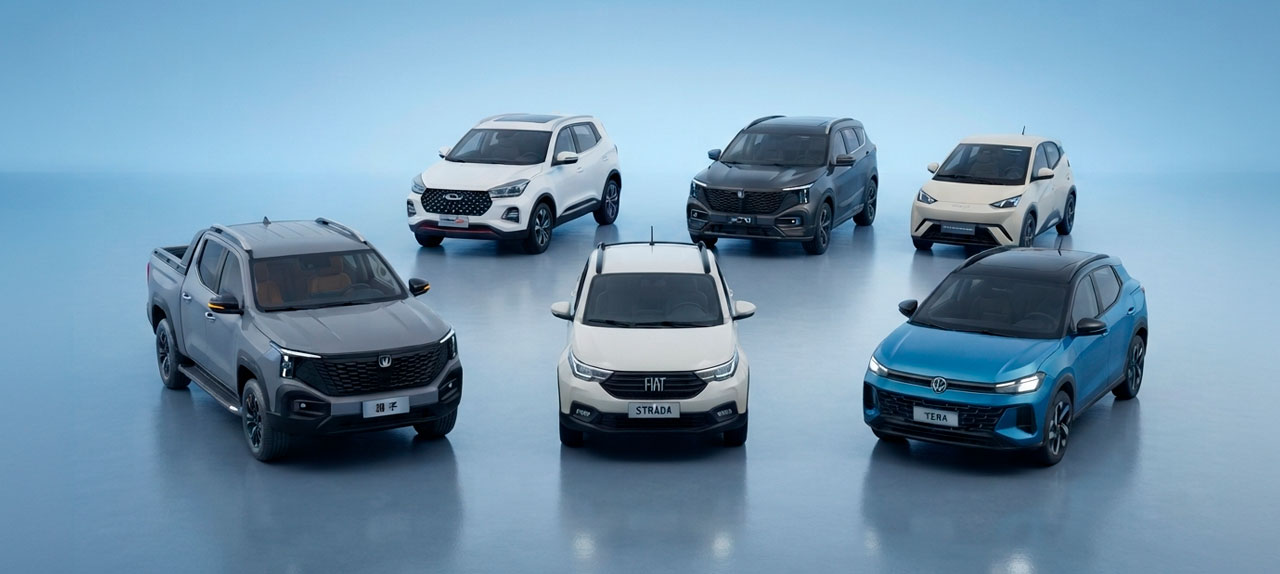
Pickups: from the urban petrol truck to the 4×4 hybrid
The light-utility market is led by the Fiat Strada (2,543 units in the half-year), followed by the Renault Oroch (1,003). In the electrified range there are electric, plug-in hybrid and extended-range pickups.
| Model | Technology | Sales Jan–Jun 2026 | Reference price (USD) | Pros | Cons |
|---|---|---|---|---|---|
| Fiat Strada 1.3 (Stellantis, from Brazil) | Petrol | 2,543 | 16,490 to 22,990 | Best seller in its segment; lowest price in the table | Compact pickup: limited load capacity for rural use |
| Renault Oroch 1.6 / 1.3T | Petrol | 1,003 | 20,990 to 25,990 (one dealer’s list, to be confirmed) | Double cab with 4×2 drive in the 1.3T version | Price depends on the dealer |
| Riddara RD6 | Electric | 387 | 50,990 (86 kWh, MY2025 data sheet); an earlier 63 kWh version was listed at 44,042 (2024). Outdated prices, to be confirmed | Electric pickup with up to 86 kWh battery and 8-year battery warranty | Charging a battery that size on the public network is expensive; suited to local use |
| Changan Hunter REEV 2.0T | Extended range | n/a | 39,028 to 46,348 | The petrol engine only generates electricity: removes the highway limitation | Launched in October 2025, no sales history |
| BYD Shark 1.5T DMO 4WD | Plug-in hybrid | n/a | 69,490 to 72,990 | Hybrid 4×4 drive | Costs more than three times a Strada |
| Toyota Hilux (reference) | Diesel | 387 | From 60,000 (SRV 4×4, third-party source) | Resale value and a long-established service network | Outside the article’s criteria; the price comes from a financing site |
Someone who lives on a small farm and combines rural roads with long trips will find the Hunter REEV the most logical proposition in the table, with the caveat that it is a recent model. For urban use from a home in the area, a compact petrol pickup such as the Strada is enough.
If you travel often to Montevideo or Argentina
Here the pure electric car loses its advantage. Two reasons add up. The first is infrastructure: outside the Punta del Este corridor there are fewer charging points, and for Argentina we found no reliable source on charger density, so we recommend checking the exact route before crossing. The second is physics: on the highway, at constant speed, regenerative braking recovers almost no energy and consumption rises with speed. A round trip to Montevideo, about 130 km each way, means that with 30 to 45 kWh batteries you need to plan a charge on the road at public-network prices.
| Usage profile | Best-fit option | What to watch |
|---|---|---|
| Only Punta del Este, with a home outlet | Electric (BYD Seagull, Geely EX2, Yuan Pro EV) | Proper electrical installation; IMESI from 2027 |
| Punta del Este and Montevideo every week | Plug-in hybrid or REEV (BYD Yuan Pro DM-i, Changan Hunter REEV) | Confirm battery capacity and warranty |
| Frequent trips to Argentina | Hybrid or petrol (Chery Tiggo 4 CSH, VW Tera) | No dependence on chargers |
| Pickup for a farm and the highway | REEV pickup or petrol/diesel pickup | Recent models: ask for service history |
| No home outlet | Petrol or hybrid | Public charging costs five times home charging |
Before you buy
Three practical checks: confirm the current price with the dealer (several data sheets in this article are launch prices), make sure your home can support a charging installation if you choose an electric or plug-in car, and review the charging map for the area where you will live.
Modo Punta publishes guides on mobility, services and everyday life for people settling in Punta del Este and the east coast. To follow news and trends in the city for new residents, join our networks on Instagram @modopuntamag or write to info@modopunta.com.
Sources
- Autoblog Uruguay: 30 best-selling models of the first half of 2026 (ACAU)
- Autoblog Uruguay: New-car prices, updated 29/09/2026
- Airbag / Montevideo Portal: brand ranking for the first half of 2026
- UTE: benefits for electric mobility customers and UTE: sustainable mobility charging
- Autoblog Uruguay: IMESI reform for electric cars (1 July 2026)
- Autoblog Uruguay: Volkswagen Tera launch (pre-sale prices)
- Autoblog Uruguay: Riddara RD6 MY2025 (2025 prices)
Prices and sales: sources as indicated, consulted on 30/09/2026. Tera, Riddara RD6, Oroch and Hilux prices have not been verified with dealers.