Alternative education in El Chorro: the Montessori model growing at Ikigai School
Set in a natural environment and focused on the whole development of the child, Ikigai School is betting on an alternative pedagogy on the eastern coast. Director Laura Bilat explains how the Montessori model works and why it is an educational option increasingly chosen in Punta del Este.
On Pejerreyes street in the El Chorro neighborhood, surrounded by vegetation and calm, one of the region’s most distinctive educational projects operates. It is Ikigai School, a school that adopts the Montessori methodology, a pedagogical approach born in Italy in 1907 that today extends to hundreds of schools around the world. Laura Bilat, General Director of Equidad y Montessori School, leads the team and states with conviction: “Montessori is not a traditional educational system, it is an alternative. We work through concrete materials, which makes learning tangible and experiential.”
Trained as a Montessori guide, preschool educator and specialist in Positive Discipline, Bilat details how the Montessori approach transforms the way of teaching: “Children understand the whole process through the material. In mathematics, for example, they can physically see the volume each number takes up, rather than seeing it flat as in a traditional school.”
center top no-repeat
https://modopunta.com/wp-content/uploads/2025/08/Ikigai_baja.m4v#2913

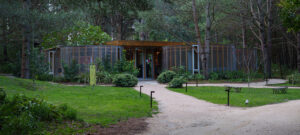
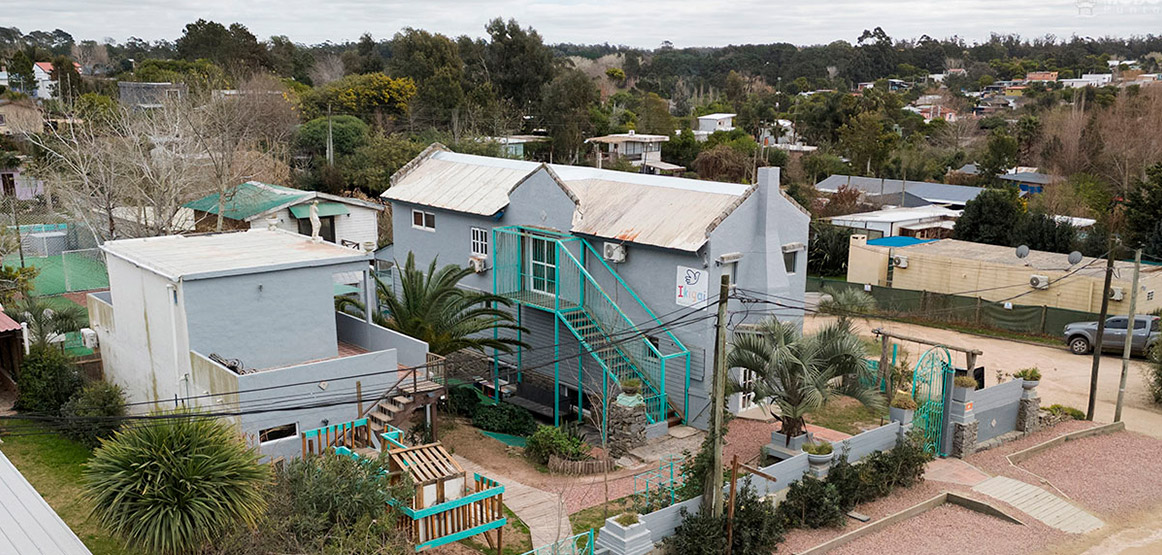
View of Ikigai Montessori School View of Ikigai Montessori School

Laura Bilat, General Director of Ikigai Montessori School Laura Bilat, General Director of Ikigai Montessori School
“We work with collaborative learning between older and younger children. This fosters respect, empathy and the joint construction of knowledge.”
A space to learn according to interests
The environment at Ikigai School is specially designed for autonomous and collaborative learning. The classrooms are multi-grade, and play between ages becomes a strength: “We work with collaborative learning between older and younger children. This fosters respect, empathy and the joint construction of knowledge.”
The school offers kindergarten from the first year of life, a full primary cycle and, soon, a secondary level. “A few weeks ago I was in Germany doing training because there are a great many Montessori secondary schools in Europe. We are in the middle of planning that stage.”
In addition, English immersion is part of the curriculum. The English teachers work inside the classroom environments and are part of the school’s daily routine. “Some subjects are taught exclusively in English, and with the youngest children we work with routines and everyday instructions in that language.”
Optional double shift and nature as classroom
A distinctive feature of the project is its split-day structure. In the morning, students attend Portal Bosque, with workshops in robotics, art, free play and multiple skills. And in the afternoon, the cycle is completed in the main Ikigai building. “The double shift is not mandatory. The children can choose whether to attend the morning module.”
The connection with nature is another pillar of the model: “We believe outdoor learning helps children connect with others, to respect, and to build a sensitivity that is essential in the Montessori approach.”
Also art plays a central role in the pedagogical proposal: “It is essential for putting our emotions into work and for getting to know artists from around the world. It connects us with personal and cultural expression.”
center top no-repeat

The school has an outdoor recreation space. The school has an outdoor recreation space.

Children have fun playing hopscotch. Children have fun playing hopscotch.
Photo Gallery
center top no-repeat
2880,2881,2887,2893,2889,2888,2882,2883,2884,2886,2897,2894,2892,2890,2891
A community that supports
Beyond the child, Ikigai also puts the focus on the family: “More than the characteristics of the child, what matters is the characteristics of the adults who accompany them. These are families who care for the process, who do not rush and who understand that each child learns differently.”
The school promotes an education without arbitrary impositions. “Here we never use ‘no’ as an empty answer. We always explain why yes or no, and the children inquire, ask questions and build their own judgment. That is why our graduates are confident children with critical thinking and an awareness of their role in the family and the community.”
A model that invites discovery
In a context where educational alternatives are gaining relevance, Ikigai is establishing itself as a space for exploration and growth in the East. “The difference from traditional schools is not in the content, but in how you get there. Here the children understand why they are learning something, and often go on to dig deeper on their own into topics that interest them.”
center top no-repeat

Teachers at Colegio Ikigai Montessori. The teachers’ vocation is key to the education of the little ones.

The classrooms are the spaces where children unfold all their creativity and ingenuity.
Activities at Portal Bosque
The morning module, from 9 am to 12 pm, takes place in an environment where nature, technology and culture accompany each child’s learning.
center top no-repeat
2906,2911,2909,2907,2910,2905
Contact
To learn more about the Ikigai School proposal, you can visit its account on Instagram or call
+598-099-909-198
Location
center top no-repeat
icon
icon-down-open
border-solid
About the Montessori philosophy
The pedagogical approach was created in 1907 by the Italian physician and educator María Montessori, who designed an approach centered on the whole development of the child. Her method is based on scientific observation, respect for individual rhythms and autonomous learning from an early age.
This philosophy promotes an environment that encourages exploration, freedom within limits and direct experience as the path to learning. The adult’s role is to accompany, guide and observe, allowing each child to build their own knowledge through play and experimentation.
The use of wooden materials is no accident: these kinds of elements, connected with nature, invite authentic sensory interaction. Their concrete and aesthetic design allows abstract concepts to be understood with the hands, awakening logical thinking and concentration.
The approach fosters skills that go beyond the academic. Autonomy, emotional security, creativity and the capacity to make decisions are developed in a respectful environment, preparing girls and boys to be conscious, balanced and empathetic people.
center top no-repeat
icon
icon-down-open
border-solid
Lots for sale Pueblo Mío
https://modopunta.com/terrenos-en-venta-en-pueblo-mio-manantiales-oportunidad-exclusiva/
Lots for sale in Barrio Pueblo Mío
Esto es Modo Punta
Content and experiences produced to understand how Punta del Este is lived
center top no-repeat
grid
date
DESC
actividades