Interview with Julia Garay of Monoccino: Design, Interior Design and Art in Uruguay
Julia Garay, founder of Monoccino, opens the doors of her hub in Uruguay to us. Beyond selling original European and Danish furniture, Monoccino specializes in offering a professional, turnkey interior design service. From color consulting to full project coordination for houses and apartments, her philosophy centers on functionality, quality and interpreting each client’s lifestyle.
To start, tell us briefly about your professional path and how you got into the world of design and interior decoration.
I’m Julia Garay, I’m Argentine. I’ve lived here in Uruguay for about fifteen years. I studied architecture, but I didn’t finish my degree because I left my city. When I came to Uruguay, life led me to interior design. I started by selling furniture, then I went out on my own with a kind of concept store, and that’s how we brought the two worlds together: the store and interior design. Eventually I founded Monoccino, which is a sort of hub where we bring together interior design, furniture design, art, architecture and everything that ends up being part of a home, of a person’s life in their house.
What kind of furniture and pieces did you select for this space, and what is the origin of the products you work with?
They’re imported. At one point I found that I knew and worked a lot with Italian furniture, but on the other hand, I was much more drawn to Danish design. So I focused on those two countries to source products. But really, we developed a kind of know-how that lets us bring in products from anywhere in the world. Uruguay is an open economy, where, as long as you pay the duties, you can bring in whatever you want from anywhere. I like to go for original design, I’m somewhat against copies, because I think it works against us as designers.
I always try to choose the original product, which doesn’t necessarily mean a designer piece or a branded product, but rather the product that someone designed, prototyped, built, or sold to a brand that markets it.
Here in Uruguay there are many original products, but they have their own distribution channels. We found a niche in certain European products of a particular standard, which we in turn mix with other products that maybe don’t carry as high a price tag, and that’s our focus. There’s a lot of European product.
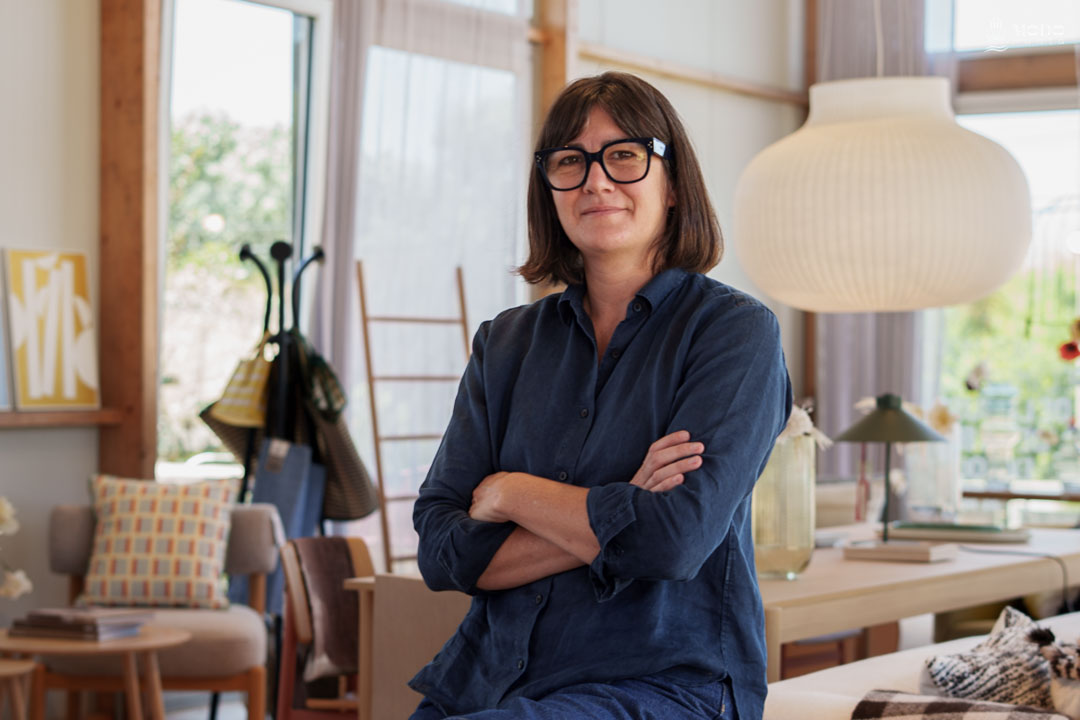
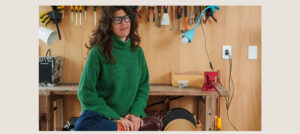
Julia Garay, founder of the interior design studio and original-furniture hub Monoccino, located on Route 10, in Balneario Buenos Aires.
Julia Garay, founder of the interior design studio and original-furniture hub Monoccino, located on Route 10, a few minutes from Manantiales.
«I think it’s essential that everything one does be intentional. Valuing what we have always seems very important to me.
For me, when it comes to design, I like to think of design as an economic concept. As I said before, it’s about the use of resources. I believe good design makes good use of resources, and I think that in the world as it is today, that is essential.»
Within the diversity of international styles, which design language do you feel best represents your vision and Monoccino’s approach?
Look, I like design that isn’t trendy. I don’t like the object of the moment, the trend. I think trends can go in a lot of directions. I like things that last, that are well thought out, well designed and that serve a purpose. I don’t like things that are pretty and useless.
I think what the brands I work with have in common is simplicity. Simplicity can be complex to manufacture in a product, but that’s it: simplicity, respect for materials and, above all, functionality.

Which brands or design studios do you currently work with, and what criteria do you use when selecting them?
We hold the exclusive representation in Argentina and Uruguay for DePadova (part of the Boffi Group). We also work with other top-tier Italian brands like Cassina, Cappellini, Paola Lenti and Flexform, and the kitchens by Fantin, which are among the best in the world.
We also work with other Danish brands like Muuto, Gubi. We work with a Swedish rug brand we’re very fond of, which is very good, called Horredsmattan (SMATA), made in a tiny little town in Sweden, using an age-old technique and very old machines, yet producing a super contemporary product.
What we actually offer is that, as long as the brand isn’t already represented in Uruguay, we can get you whatever brand you want. We like to be consistent. In fact, there are clients building an entire house who tell me: “I want such-and-such chair from such-and-such brand,” and if no one else sells it in Uruguay, I can bring it in because we have the whole mechanism set up to do that.
What experience does a first-time visitor to Monoccino take away, and what kind of pieces can they find as they walk through the space?
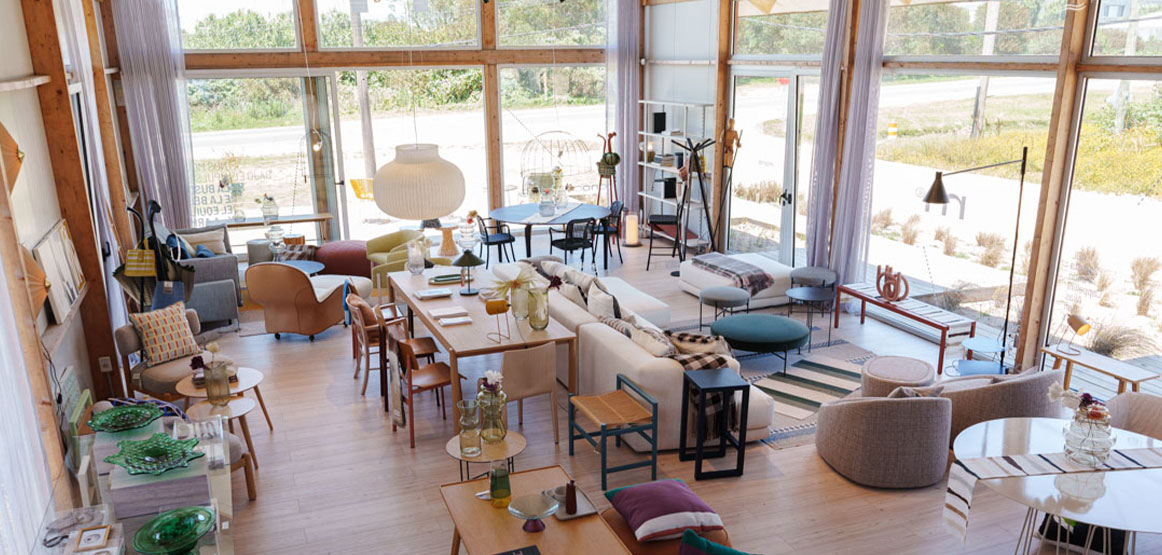
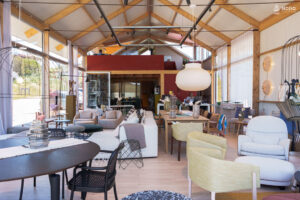
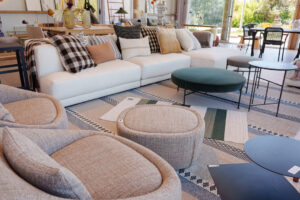
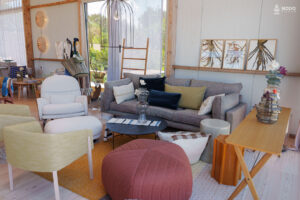
They actually find an ecosystem, I’d say. There’s everything you’d expect: chairs, tables, sofas, lamps, rugs, artworks. But there’s also the possibility of bringing in an entire world.
They find architects, because we run the studio alongside it; we have a group of architects we work with, especially on projects. We like doing turnkey projects, meaning trying to offer the complete lifestyle within a home.
On the other hand, they find a place that I think is quite homely because it isn’t ostentatious, it’s low-key. We try to make it a place where you arrive and feel comfortable, not one of those that intimidates you.
This is a recent space: where is it located and why did you choose that location?
This space is ours. We moved this year, and we did it ourselves, the way we wanted. It’s on Route 10 on the way to José Ignacio, on Calle 5, which happens to be called El Galpón [“The Shed”], because we thought of it as a kind of shed. We’re just past Manantiales, a bit further toward José Ignacio. We decided to move out of what used to be the center of Manantiales, and we feel that here we can serve clients much better because we have more time. It lets us, when someone comes in, attend to them better and focus better on the project.
Digging a bit deeper, could you tell us what professional interior design services you offer and how you support clients at each stage of a project?
At Monoccino we’re constantly evolving. I like to say we’re on a growth curve, so every day is an opportunity. We started more focused on objects, then we added furniture. In between, interior design projects came up, but almost on a separate track, and at some point we decided to bring them together.
Now you have the showroom where you can buy things we have in stock, and what we call Connect, which is what you want to order (products from Europe that generally take six months). But then we also have the studio. We do interior design for houses and apartments. This year we did some commercial projects in Montevideo; we did a café, we did a restoration of an old house in the Palermo neighborhood.
In other words, we offer a full or partial interior design service, because some people only want one room done and we can work on that, and we have the capacity to handle a turnkey project. That means we come in while the property is still under construction, with the architect’s plans, and we say: “If we take out this wall, this space will work better, and we can lay it out better so it works for you, for whatever use you want to give it.”
We start at that stage and finish when the person moves in. We buy the sheets, the cleaning supplies, the dish rack. We take care of everything, making sure it’s all consistent, that it all has the aesthetic or style the owner likes. It’s not that we want to impose our style; we believe the house has to reflect the style of the person who’s going to live there. We have to interpret what they want.
We don’t like to impose. On the other hand, I’ve been working quite a bit with color for years, so we use a lot of color too. In some projects we only do color consulting, meaning the client says: “I want to paint this,” and we go, we do tests, we look at what they already have and put together a color proposal. So we have a whole range of things and services we can offer.
From your point of view, what role does art play in an interior design project, and how does it interact with furniture and materials?
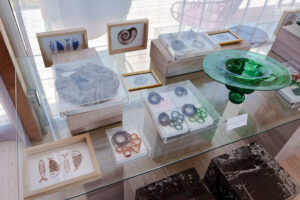
That’s a bit controversial… Some people have art because they’re collectors, because they care about the resale value of the piece. Some people have art because it holds sentimental value tied to the artist or the work, whether they inherited it, were given it as a gift, or want to support the artist. But there are also people who buy and hang pieces in their home simply because they like them, and I think every reason is valid. Someone who hangs an orange piece because it matches — great, because they’re the one who’s going to live with it, and if they enjoy it that way, that’s fine by me.
I think it’s fantastic to bring in elements that carry that somewhat more intangible value, and I think it adds a great deal to whoever lives with it.
What does art bring to others? I think it brings something insofar as the person living in the house values it. If you give someone a painting or an object and they don’t care either way, maybe it just adds to the aesthetics or for guests. But that also depends on what you’re making the spaces for: for yourself, to share, to host, or to impress?
I think that for someone with the sensitivity for it, art can add a great deal. Pieces end up being objects that look different depending on your mood. They have that quality of reflecting something back to you depending on how you’re feeling.
There’s an idea that interior design is inaccessible or only for large budgets. How true is that, and how do you approach it in your work?
If you have a lot of money, great. And if you don’t, that’s fine too. Sometimes, the fewer resources you give me, the more interesting the results. In other words, you don’t need a lot of money to hire an interior designer.
Every project has its own scale and budget. It can be ten or it can be a thousand. I think it’s a bit of a myth. Obviously, it’s not a basic necessity like architecture and a lot of other things. But yes, without a doubt, I think it’s a myth.
To close, is there any concept, reflection or message you’d like to share?
I think you have to know, or be attentive, and value and make the most of the opportunities and possibilities that life and the people around us give us. Being able to turn your work into something you enjoy this much has tremendous value for me. I try hard to instill in the people who work with me that we live somewhere spectacular, that we have a lot of possibilities, and that, on top of it, we get to work doing what we love.
I think it’s essential that everything one does be intentional. Valuing what we have always seems very important to me.
For me, when it comes to design, I like to think of design as an “economic concept.” As I said before, it’s about the use of resources. I believe good design makes good use of resources, and I think that in the world as it is today, that is essential.