A foreigner can buy a house in Punta del Este with the same rights as a Uruguayan citizen: there is no residency, visa or physical-presence requirement for the purchase. What changes for an overseas buyer is the logistics (power of attorney, international wire transfer, documentation of the source of funds) and the need for a trusted notary (escribano) to review the title before any money changes hands.
What does not change for foreign buyers
According to Global Property Guide (updated October 2024), there are no limits on the types of property foreigners can buy. The only exceptions are large rural estates and land near borders and reservoirs, which does not describe Maldonado’s coast. In practice, the documents requested are a valid passport, proof of the source of funds and a home-country address; a Uruguayan ID is not needed, and neither is a local bank account, although opening one usually simplifies payments.
The process in five steps
- Search and shortlist. Portals, agencies and virtual tours. In La Barra, Manantiales and José Ignacio, for example, compare by land registry number (padrón) and not only by neighborhood, since two adjacent lots can carry different building rules.
- Title search. First, the notary checks the Property Registry to confirm the owner, any liens, mortgages or injunctions, and the seller’s authority to sell. This step must happen before signing or paying a deposit.
- Reservation agreement (boleto de reserva) or purchase promise. This document sets the price, payment terms and the deadline for the deed. A 10% deposit is common, sometimes up to 20%. After signature, it binds both parties.
- Payment. Payment is usually made in US dollars by international transfer, with documentation of the source of funds.
- Deed and registration. Finally, the deed is signed before the notary, taxes are settled and the property is registered in the buyer’s name. From reservation, the usual timeline is 30 to 60 days, and up to 90 with bank financing.
What buying costs: transaction fees
Published references agree on the order of magnitude: between 8% and 10% of the price on the buyer’s side, which can rise on new builds because of occupancy and connection fees (2% to 4%).
| Item | Reference | Who pays |
|---|---|---|
| Property transfer tax (ITP) | 4% in total (2% + 2%) | Buyer 2%, seller 2% |
| Notary fees | About 3% + VAT | Usually the buyer |
| Agency commission | 3% + VAT per party | As agreed with the agency |
| Stamps and registration | About 0.5% | Buyer |
| Occupancy and connection (new builds only) | 2% to 4% | Buyer |
For example, on a USD 300,000 property, a buyer should budget between USD 24,000 and USD 30,000 on top of the price. Notary fees are only indicative, so ask for a written quote before signing the reservation.
What to check before signing
- Ownership and encumbrances: current registry certificates and confirmation that there are no liens or mortgages.
- Registry number and plans: that what is built matches what is permitted. For houses extended without a permit, however, regularization falls to the buyer.
- Outstanding debts: property tax (Contribución Inmobiliaria), the education tax (Impuesto de Primaria), municipal charges and common expenses in condominiums.
- Utilities: in several Manantiales and José Ignacio neighborhoods sewage is handled by septic tank and water may come from a borehole, so check the condition and the cost of connecting to the network.
- Condominium or gated-community rules: restrictions on use, short-term rentals and works.
- Who is selling: if the seller acts under a power of attorney or through a company, review its validity and scope.
Buying from abroad
The purchase can be completed without traveling through a notarized power of attorney in favor of a professional in Uruguay, who signs the reservation and the deed on the buyer’s behalf. This is a common route for buyers from Argentina, Brazil, Europe and the United States, usually combined with virtual visits. Above all, the critical point is choosing the attorney-in-fact and limiting the power to the specific transaction.
After the purchase
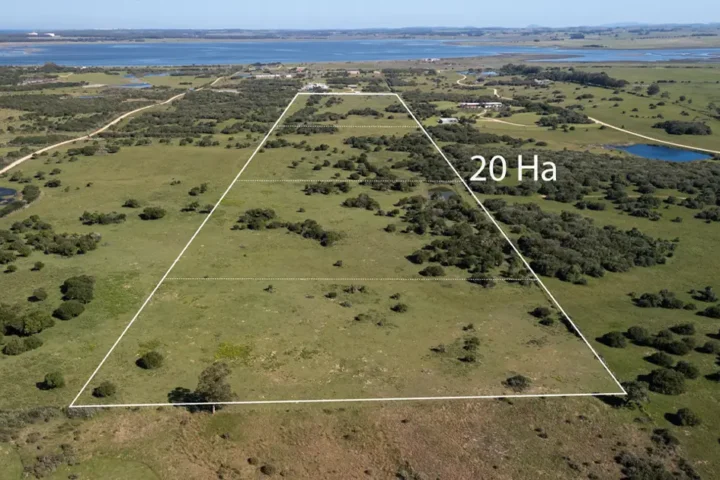
The owner pays the property tax and the education tax every year, at rates that depend on the cadastral value and the department. Note that buying a property does not by itself make you a Uruguayan tax resident: that is a separate decision with its own rules, covered in Uruguay tax residency: what the DGI says and in the 2026 tax residency guide for foreign buyers. In addition, those planning to relocate will find the wider picture in the guide to moving to Uruguay from Germany and in the year-round cost of living guide. Finally, if the search is for rural land, prices and uses are compared in chacras for sale in Maldonado: areas and price per hectare.
Sources: Global Property Guide, Uruguay buying guide (October 2024); Holafly, guide to buying a house in Uruguay; Nicolás de Modena, step-by-step guide for foreigners. Figures are market references consulted on 27 Oct 2026 and should be confirmed with a notary before transacting.